



Notes and tags that earn their keep
The structured fields say who somebody is. Notes and tags say how to deal with them.
Every person and organization has Notes and Tags. They are the most useful fields on the record and the ones most often left empty.
What a good note looks like
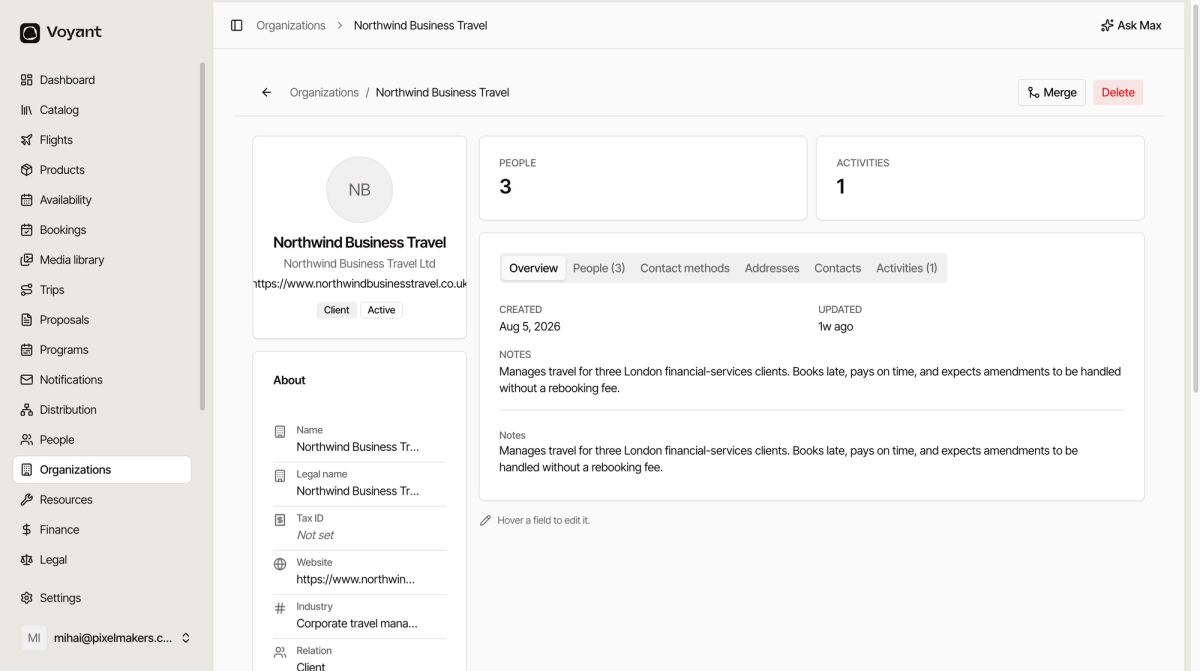
One of the sandbox companies carries this note:
Manages travel for three London financial-services clients. Books late, pays on time, and expects amendments to be handled without a rebooking fee.
Three sentences, and now anybody on your team can handle that account properly. It tells you what they do, how they behave, and what they expect.
What a bad note looks like
- "Good client." Tells you nothing you can act on.
- "Called Tuesday." Meaningless in a month.
- Anything already in a structured field, such as their phone number.
Write what the next person needs to know that is not obvious from the record.
Tags
Short labels for filtering, such as vip, or a market, or a source.
Keep the vocabulary small. Fifty tags used once each are worse than five used consistently, because nobody can remember which to filter by.
Where notes pay off
The moment somebody who is not you picks up the account. Holiday cover, a new starter, or you in eighteen months having forgotten the conversation entirely.
Did this answer your question?
Thanks for your feedback.