



Pools, allocations and assignments
Three related ideas that get a resource to a date: group the capacity, attach it to a product, then name it on a specific departure.
The Resources screen has five tabs. Resources and Closeouts are self-explanatory. The middle three are a chain, and they make more sense read in order.
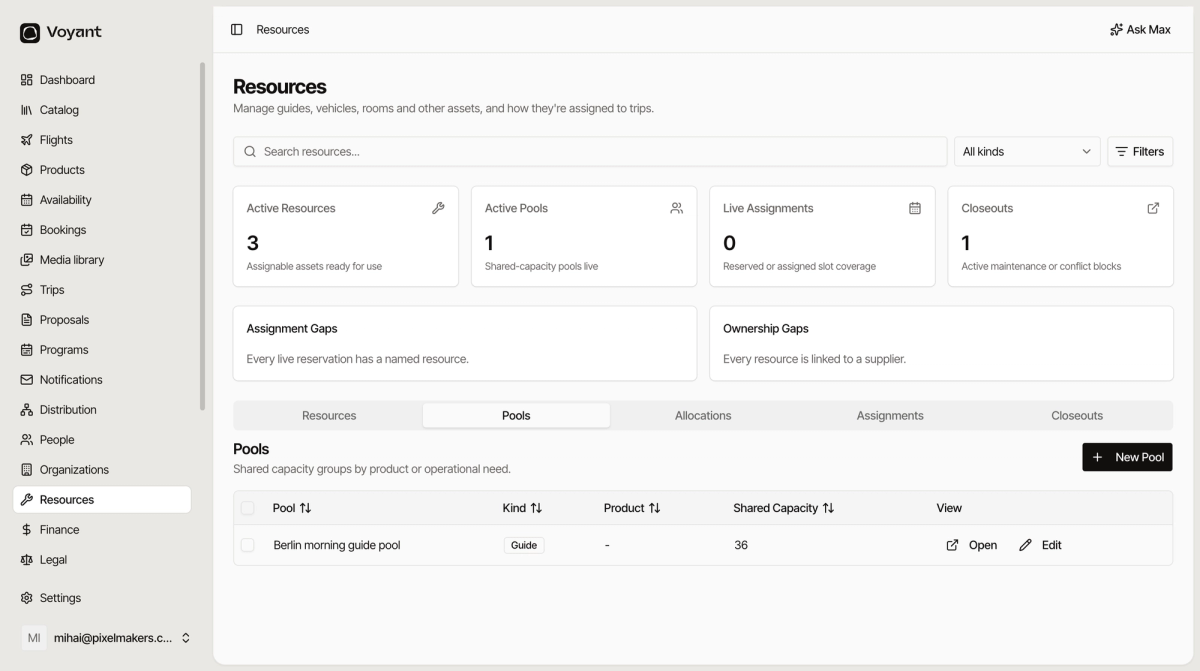
Pools
A pool is a shared capacity group, described in the product as shared capacity groups by product or operational need.
Rather than tracking three identical minibuses separately, you put them in one pool with a combined capacity. Anything drawing on that pool draws on the shared total.
Use pools when the assets are interchangeable. If it does not matter which of the three minibuses turns up, pool them.
Allocations
An allocation attaches a pool to products, rules and start times.
This is where you say the airport-transfer pool serves the airport-transfer product on the 08:00 and 16:00 departures. Each allocation has a Mode, a Qty, whether it is Required, and a Priority.
Required is the important one. If a product cannot run without the resource, mark it required and the system knows a departure without one is broken rather than merely untidy.
Assignments
An assignment reserves or assigns a specific resource against a live slot or booking.
This is the concrete end of the chain: Coach A is on Saturday's 10:00 departure, and here is the booking it covers.
The Status shows whether it is reserved or firmly assigned, and Released shows when it was let go.
Reading it as a sentence
A pool holds interchangeable capacity. An allocation points that pool at the products that need it. An assignment puts a named asset on a specific date.
You may not need all three
A small operator with one coach and two guides can assign directly from the departure and never create a pool. Pools and allocations earn their keep once you have enough assets that tracking them individually stops being practical.
Did this answer your question?
Thanks for your feedback.